Apple Shrub Soda: Bright, Fizzy, 68 Cents Each
Every fall I end up with a bag of apples that are past their crisp prime, and this is the best use I have found for them. A shrub is a drinking vinegar: fruit, sugar, and vinegar, rested until the mixture turns into a concentrated syrup that is far too sharp to drink straight and exactly right once sparkling water hits it. The method I follow is adapted from the University of Missouri Extension's fruit shrub guidance in Preserve It Fresh, Preserve It Safe, which uses 1 pound of chopped fruit, 2 cups of sugar, and 2 cups of vinegar for a large batch, and serves the finished shrub at 1 part shrub to 5 parts sparkling water. My version cooks the apples briefly, uses less sugar, and leans on ginger and cinnamon for a fall profile. A batch makes 8 drinks for 5.40 dollars.
Step 1: Cook the fruit into the vinegar, not beside it
Chop 2 pounds of apples, cores and all except the stems, into rough chunks. Put them in a pot with 1 and 1/2 cups of apple cider vinegar, 3/4 cup of brown sugar, a thumb of sliced fresh ginger, one cinnamon stick, and 4 whole cloves. Simmer gently for 12 to 15 minutes, until the apples slump and the liquid turns amber. Do not boil it hard; you are extracting flavor, not making applesauce, and a hard boil dulls the vinegar's snap. This cooked method is the same instinct behind my caramel apple soda, where the fruit has to give up its flavor to the syrup before carbonation ever gets involved.
Step 2: Rest it, strain it, refrigerate it
Take the pot off the heat, cover it, and let it sit for at least 4 hours and up to overnight. Strain through a fine sieve, pressing the fruit firmly, and pour the shrub into a clean glass jar. You should get about 2 cups. Refrigerate it and use it within 4 to 6 weeks, the storage window the Missouri Extension shrub guidance gives for refrigerated fruit shrubs. If it smells like anything other than apples and vinegar, or grows anything visible, it goes in the sink. In two fall seasons of making this, I have never had a jar last long enough to test the far end of that window.
Step 3: Build the drink at 1 to 5
For each drink, pour 1/4 cup of shrub over a tall glass of ice and top with about 1 and 1/4 cups of cold sparkling water, which lands you on the Extension's 1-to-5 serving ratio. Stir once. The first sip should read as cider, then bright, then gently warm from the ginger at the back. If it reads as salad dressing, your pour was heavy; shrubs punish heavy hands. Carbonation quality matters more here than in a sweet soda, because there is less sugar to hide flat water, which is why the math in my soda maker versus CO2 tank cost breakdown decides what I serve this in at home.
The batch math: $5.40 for 8 drinks
| Ingredient | Amount | My cost |
|---|---|---|
| Apples | 2 lb | 2.40 dollars |
| Apple cider vinegar | 1.5 cups | 0.90 dollars |
| Brown sugar | 3/4 cup | 0.50 dollars |
| Ginger and whole spice | 1 thumb, stick, cloves | 0.40 dollars |
| Sparkling water | for 8 drinks | 1.20 dollars |
| Total | 8 drinks | 5.40 dollars |
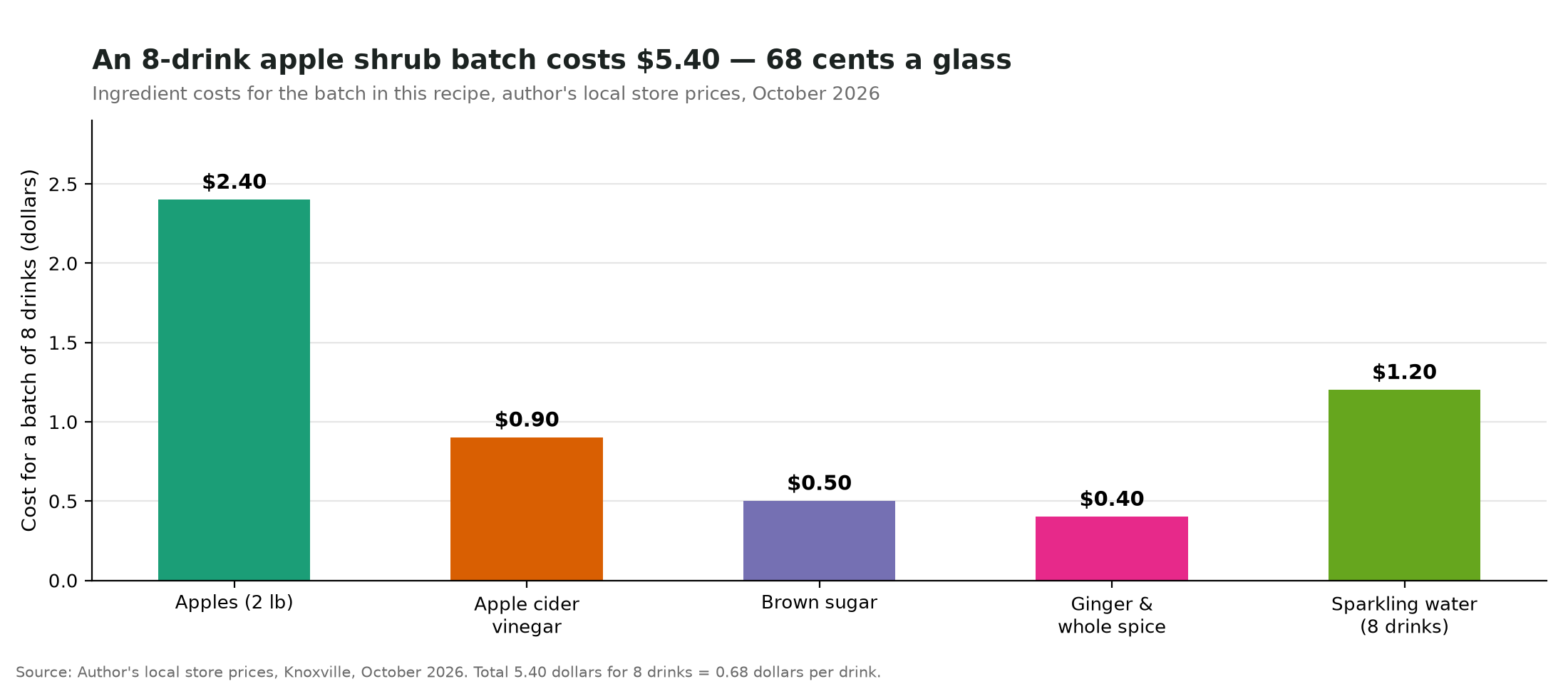 Batch cost breakdown for 8 apple shrub sodas, 68 cents a drink. The apples are the batch; everything else is pantry math. Source: author's local store prices, October 2026.
At 68 cents a glass, this undercuts every bottled drinking vinegar I have priced by a factor of four or more, and it uses fruit that was headed for the compost. The honest cost note is the vinegar: a good raw apple cider vinegar is the one ingredient not to buy at the bottom shelf, because it is a third of the flavor. Everything else is forgiving.
Two variations that actually work
For a warmer drink, swap the sparkling water for hot water and a squeeze of lemon and you have a shrub toddy base that carries a cold evening; the spice notes move forward and the vinegar recedes. For a sharper one, split the vinegar, half apple cider and half red wine vinegar, which pulls the drink toward the cranberry end of the orchard and pairs well with the tart profile of my spiced apple cider soda. What does not work, from experience: fresh herbs cooked in the pot. Basil and mint both go muddy when simmered in vinegar. Add them to the glass as a garnish instead, where they stay bright.
Get the newsletter
New articles and the occasional deep dive. No spam.
Unsubscribe anytime. We never sell your email.