Seltzer vs Club Soda: Myths About Fizzy Water
Every homemade soda recipe I publish says "top with sparkling water," and every few weeks someone asks whether club soda or tonic is the same thing. It is not, and the differences are small enough to miss on the shelf and big enough to taste in the glass. I have ruined exactly one batch learning this — a tonic swap that turned a dry, tart drink into candy — so here is the myth-by-myth version, with the label numbers attached. If you are stocking a home soda shelf for Thanksgiving week, this is the buying decision underneath recipes like my sparkling apple cider comparison.
Myth 1: They are all just fizzy water
Fact: only one of them is. Seltzer is plain water carbonated with CO2 and nothing else. Club soda is carbonated water with mineral salts added on purpose — typically sodium bicarbonate, sodium chloride and potassium sulfate — which is why it tastes faintly salty and stands up in mixed drinks. Sparkling mineral water gets its minerals from its source rather than a factory. The cleanest summary I found is that club soda contains added minerals like sodium bicarbonate and potassium sulfate, while sparkling water is simply water infused with carbon dioxide, and USDA FoodData Central puts a 12-ounce can of club soda at about 75 mg of sodium. Brand labels run higher: Schweppes club soda carries 95 mg and Canada Dry 115 mg per serving, per a label-by-label comparison at Eat This, Not That.
| Fizzy water | Added minerals | Sodium per 12 oz | Calories | Taste | My use for it |
|---|---|---|---|---|---|
| Seltzer | None | 0 mg | 0 | Neutral, clean | Default base for homemade soda |
| Sparkling mineral water | From the source | About 15-45 mg (10-30 mg per 8 oz) | 0 | Varies by source | Drinking straight, delicate flavors |
| Club soda (USDA generic) | Yes | 75 mg | 0 | Slightly salty | Bold, savory-leaning mixes |
| Club soda (Schweppes) | Yes | 95 mg | 0 | Slightly salty | Same |
| Club soda (Canada Dry) | Yes | 115 mg | 0 | Saltiest of the three | Same |
| Tonic water | Quinine + sweetener | About 55 mg | About 120 | Bitter-sweet | Not a substitute, ever |
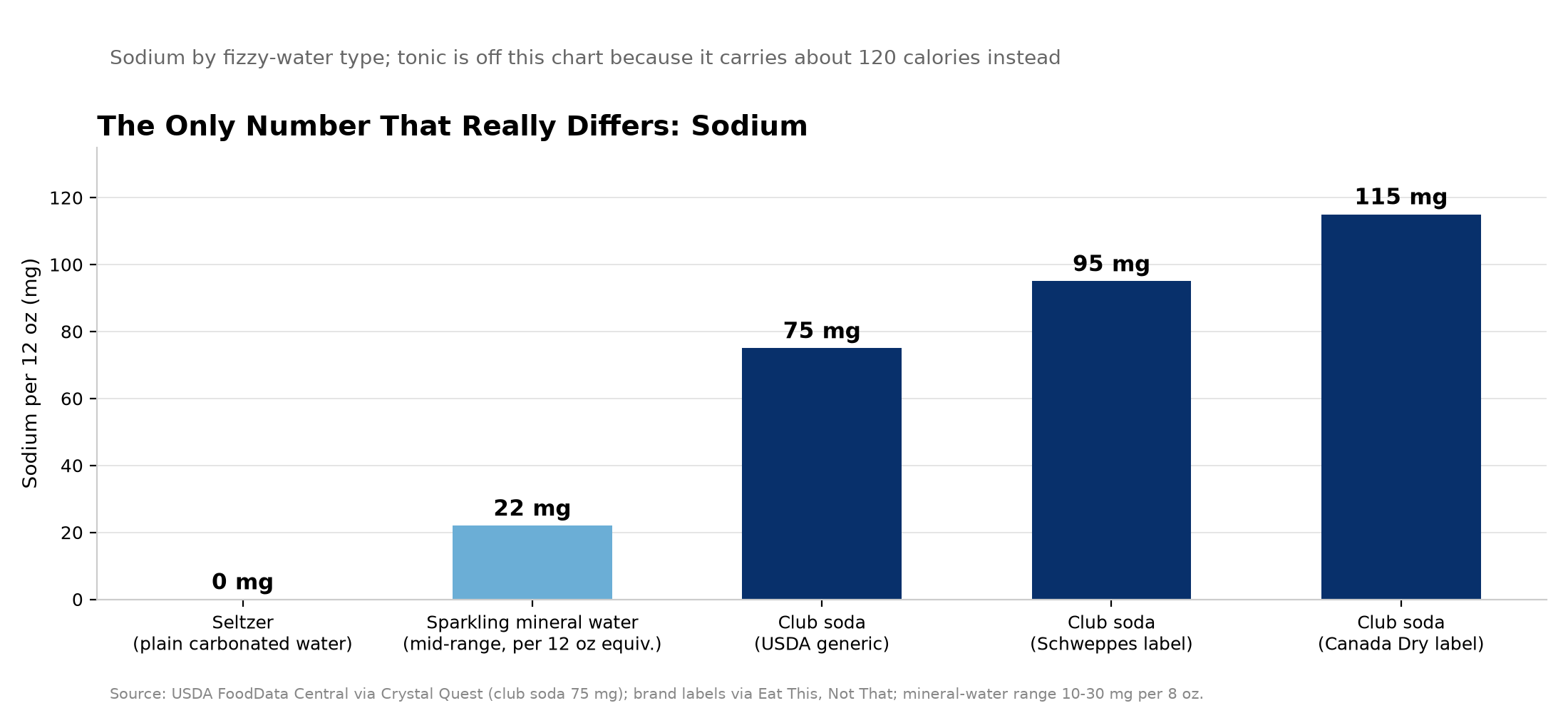
Sodium is the measurable difference between these bottles: 0 mg in seltzer, 75 to 115 mg in club sodas. Sources: USDA FoodData Central via Crystal Quest; brand labels via Eat This, Not That; mineral-water range as cited in the article.
Myth 2: The salty one is the unhealthy one
Fact: the numbers are real but small. Even the saltiest can on my chart, at 115 mg, is about 5% of the 2,300 mg daily sodium ceiling those same label comparisons cite. If you drink fizzy water by the liter all day, seltzer's zero adds up in your favor; for one glass over a homemade syrup, the difference between 0 and 95 mg will not decide your day. What it will decide is flavor: that mineral edge can flatten a delicate syrup — it muted my New York egg cream test noticeably — and it can help a sturdy one, which is why bar recipes keep specifying club soda.
Myth 3: Tonic is the strong-flavored member of the family
Fact: tonic is not in the family at all. It is a sweetened soft drink with quinine, at roughly 120 calories per 12 ounces where everything else on the table is zero. Swapping it in does not make a soda "more interesting"; it adds about 30 grams of sugar I never budgeted and a bitter note that fights fruit syrups. It is the one substitution I tell readers never to make, ahead of even the flat-water mistake in my ginger switchel soda, where at least the flavor stayed honest.
What I actually buy
For a home soda shelf, my rule is simple and cheap. Seltzer is the default: neutral, sodium-free, and at my local prices the store brand runs $0.89 a liter against $1.09 for club soda and $1.49 for a name-brand sparkling mineral water (my price check this week; yours will vary). I keep one bottle of club soda only for recipes that name it, and mineral water only for drinking straight, where its flavor is the point. Stock those three roles — base, specialist, straight — and the whole confusing shelf collapses into one decision you make once.
Get the newsletter
New articles and the occasional deep dive. No spam.
Unsubscribe anytime. We never sell your email.